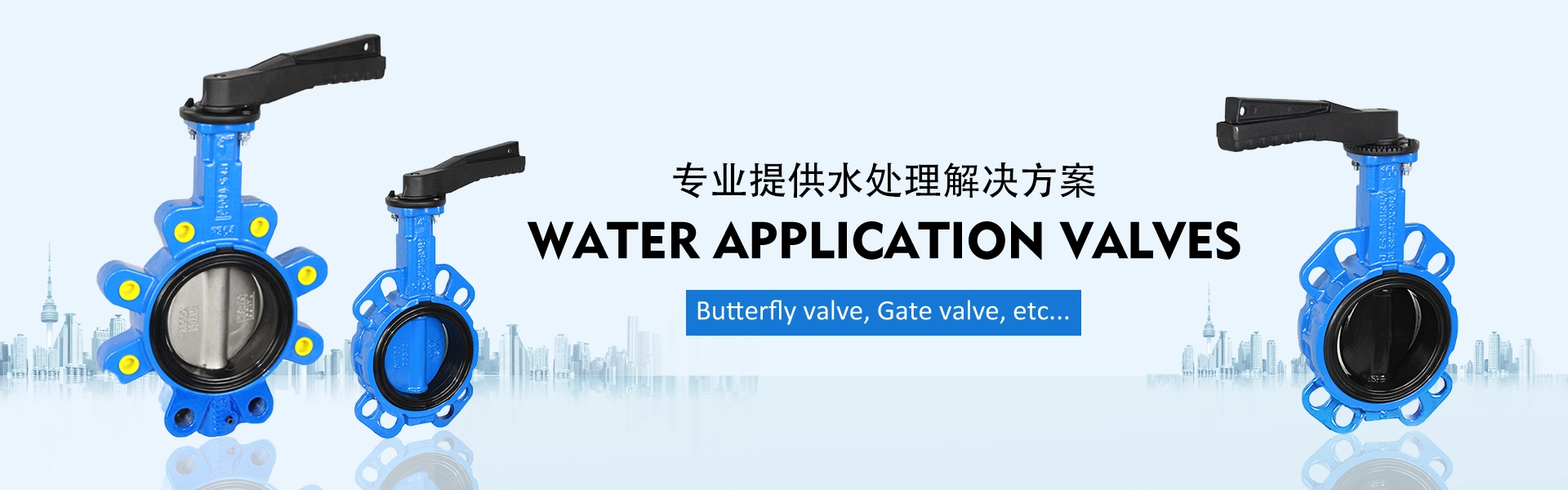
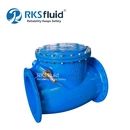
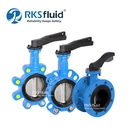
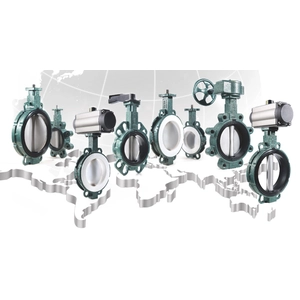
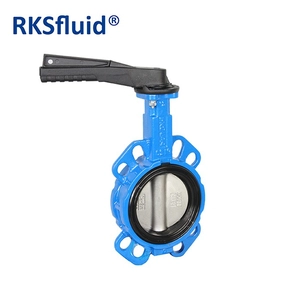
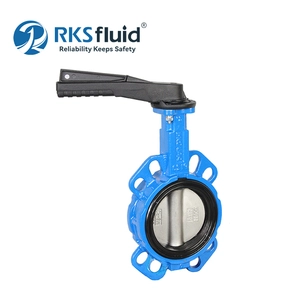
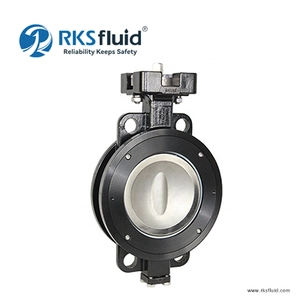
Butterfly valve is a very common flow control device. Before it can be used better, we need to have a certain understanding of the principle and installation method of butterfly valve.
The relationship between the opening degree of the butterfly valve and the flow rate is basically linear. If used to control flow, its flow characteristics are closely related to the flow resistance of the pipeline. For example, the diameter and form of the two pipeline installation valves are the same, the pipeline loss coefficients are different, and the flow difference between the valves is also large.
If the valve is in a large throttle state, the back of the valve plate is prone to cavitation, which may damage the valve. Generally, it is used outside 15 °.
When the butterfly valve is in the middle opening, the shape of the opening formed by the valve body and the front end of the butterfly plate is centered on the valve shaft, and two sides are formed to complete different states. The front end of the butterfly plate moves in the water direction and the other side flows in the opposite direction. Therefore, one side of the valve body and the valve plate form a nozzle-like opening, and the other side is similar to a hole-like opening. The seal will come off.
The operating torque of the butterfly valve varies according to the opening degree and opening and closing direction of the valve. Horizontal butterfly valves, especially large-caliber valves, due to the depth of the water, the torque generated by the difference between the upper and lower heads of the valve shaft cannot be ignored.
In addition, when an elbow is installed on the valve inlet side, a bias current is formed and the torque increases. When the valve is in the middle opening, the operating mechanism needs to be self-locking due to the effect of water flow torque.
Above is all the introduction of the butterfly valve using the principle and installation method, I hope that through our explanation can help you understand the butterfly valve in more detail.
 +86 138 8989 6699