Dismantling joints are widely used in water transmission pipelines, pump stations and valve installations. Their primary function is to provide axial adjustment during installation and allow easier removal of valves, pumps or other pipeline equipment during maintenance.
Although the component itself is relatively simple, improper installation may lead to alignment issues, bolt stress or leakage at flange connections.
1. Understand the Function
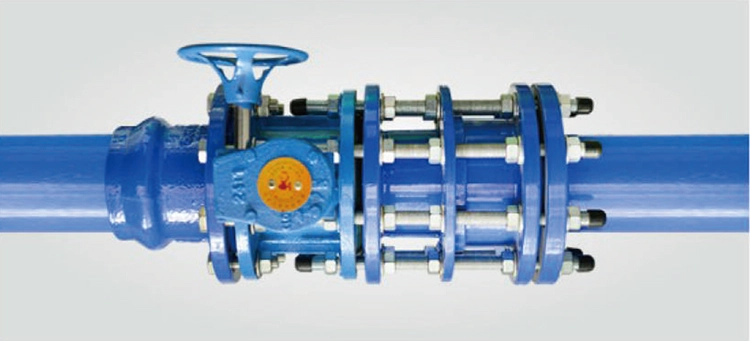
A Dismantling joints is designed to provide limited axial adjustment, typically used to compensate for installation tolerances between flanged equipment. In many water pipeline systems, dismantling joints are installed together with: Butterfly valves, Gate valves, Pumps and Flow meters etc.
The adjustable length allows installers to simplify alignment and reduce the difficulty of removing equipment during future maintenance.
It is important to note that dismantling joints are not intended to absorb thermal expansion like expansion joints.
2. Pre-Installation Inspection
Before installation, the following checks are recommended:
- Verify flange standards and pressure rating (PN or Class)
- Confirm installation length and adjustment range
- Inspect sealing surfaces for damage
- Check that tie rods, bolts and nuts are properly supplied
Any protective covers on flange faces should be removed only immediately before installation to prevent contamination.
3. Pipeline Alignment
Proper pipeline alignment is one of the most important factors during installation.
The dismantling joint should not be used to compensate for major misalignment in the pipeline. If the pipeline is forced into position using the joint, excessive stress may be transferred to:
- valve flanges
- pump nozzles
- pipeline welds
During installation, the pipeline should be aligned first, and the dismantling joint should only be used to accommodate small dimensional tolerances.
4. Installation Procedure
A typical installation process includes the following steps:
- Position the dismantling joint between the two flanged components.
- Insert flange bolts and tighten them lightly to keep the assembly aligned.
- Adjust the joint length within the designed axial range.
- Gradually tighten flange bolts using a cross-pattern tightening sequence.
- Secure the tie rods according to manufacturer recommendations.
Uniform bolt tightening is important to ensure even gasket compression and avoid flange leakage.
5. Adjustment and Locking
After the pipeline section has been properly aligned and the flange bolts are tightened, the tie rods should be secured to maintain the designed installation length.
The tie rods help prevent excessive movement of the joint during operation, especially in systems with pressure fluctuations. However, they should not be over-tightened in a way that restricts the intended installation adjustment.
6. Pressure Testing
Once installation is completed, the pipeline system should undergo pressure testing according to the project specification.
During testing, attention should be paid to:
flange gasket sealing, bolt tension consistency, any axial movement of the joint
If leakage occurs, bolt tightening should be checked before disassembling the joint.
7. Maintenance Considerations
One of the main advantages of dismantling joints is facilitating equipment removal during maintenance.
When a valve or pump needs to be removed:
- loosen the tie rods
- retract the joint within its adjustment range
- create sufficient space for equipment removal
This reduces the need for cutting or modifying pipeline sections.
A dismantling joint is a practical component that simplifies installation and maintenance in many pipeline systems. Proper alignment, controlled adjustment and correct bolt tightening are essential for reliable performance.
Following standard installation practices helps ensure that the joint performs its intended function without introducing unnecessary stress to the pipeline or connected equipment.
 +86 138 8989 6699