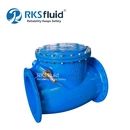
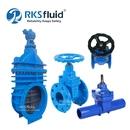
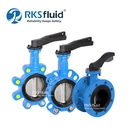
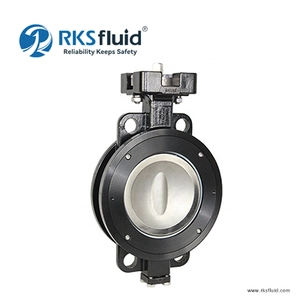
Butterfly valves are widely used in water transmission, industrial process systems, power plants and oil & gas pipelines.
Among different designs, double eccentric (double offset) and triple offset butterfly valves are commonly specified for demanding applications.
Although they may appear similar externally, their sealing principles and application suitability differ significantly.
1. Structural Principle Difference
Double Eccentric Butterfly Valve
A double eccentric butterfly valve features two offsets:
- The shaft is offset from the valve centerline.
- The shaft is offset from the sealing surface centerline.
This geometry reduces seat friction during opening and closing. The disc quickly disengages from the seat after a small rotation angle, reducing wear compared to concentric butterfly valves.
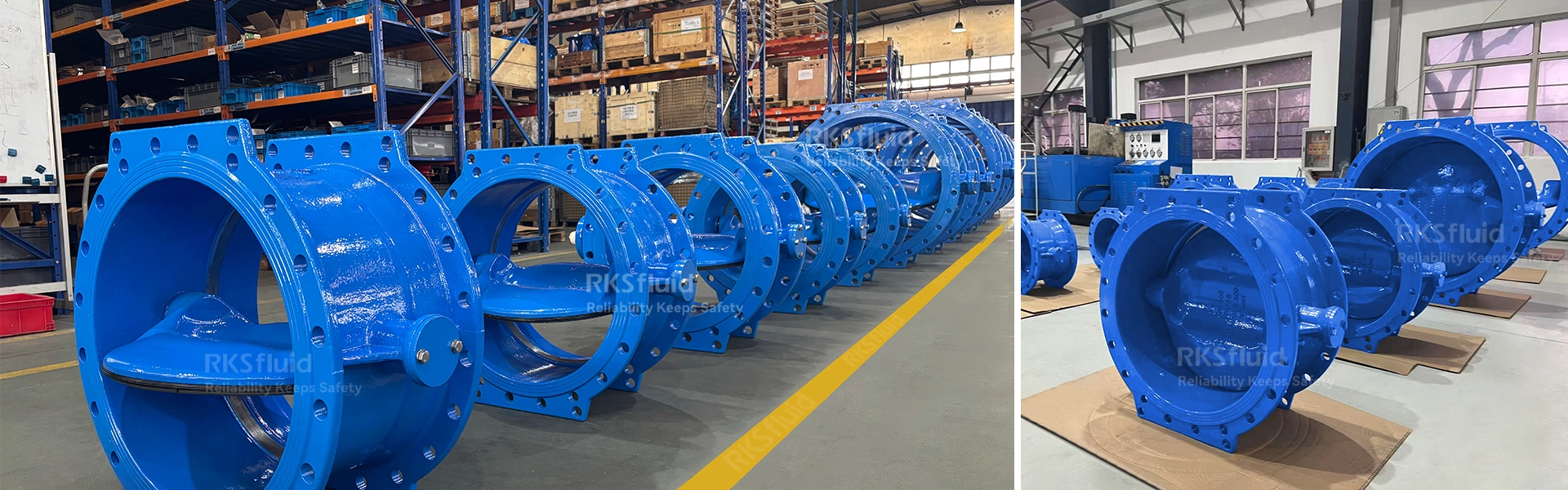
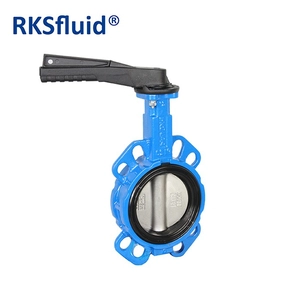
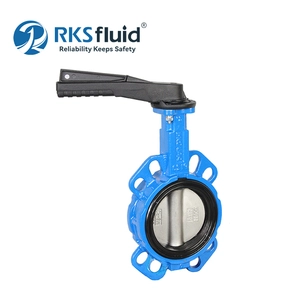
RKSfluid ATHENA series follows this structural principle, designed for reliable sealing performance in medium to large diameter pipeline systems.
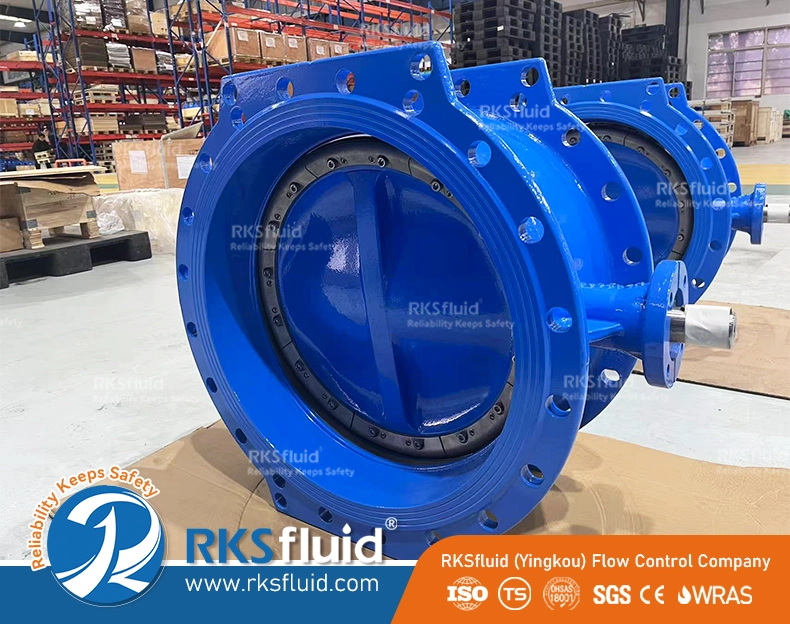
Triple Offset Butterfly Valve
In addition to the two offsets above, triple offset butterfly valves introduce: A conical sealing surface geometry (angular offset)
This design enables:
- Metal-to-metal sealing
- Zero leakage under high pressure
- Reduced friction during final closure
Triple offset valves are typically used in higher temperature and higher pressure applications, especially in oil & gas and petrochemical systems.
2. Sealing Mechanism Comparison
Double Eccentric:
- Usually resilient or soft-seated (EPDM, NBR, PTFE, etc.)
- Suitable for tight shut-off in water and general industrial systems
- Bidirectional sealing depending on seat design
Triple Offset:
- Metal-to-metal sealing
- Suitable for high temperature and high pressure
- Often used where fire-safe or API requirements apply
Engineering Note:
Seat material and system conditions (pressure, temperature, media) are more critical than offset number alone.
3. Pressure and Temperature Range
Double Eccentric Butterfly Valves:
- Commonly used up to medium-high pressure classes
- Widely applied in PN10–PN40 or 150LB–600LB systems
- Suitable for water, seawater, HVAC and general industrial fluids
Triple Offset Butterfly Valves:
- Used in higher pressure classes (often up to 900LB and above)
- Suitable for higher temperature service
- Common in hydrocarbon and steam applications
- Actual limits depend on manufacturer design and standards compliance.
4. Application Scenario Comparison
Double Eccentric Butterfly Valve is commonly selected for: Municipal water transmission, Seawater intake and desalination plants, Cooling water systems, Large-diameter industrial pipelines, Medium pressure applications requiring reliable shut-off
Triple Offset Butterfly Valve is commonly selected for: Oil & gas pipelines, Refinery and petrochemical plants, High temperature systems, Steam service, Fire-safe critical installations
There is no universal superiority; selection must be based on system requirements.
When choosing between double eccentric and triple offset butterfly valves, evaluate:
- Design pressure
- Operating temperature
- Media type
- Required leakage class
- Project specification (API, fire-safe, etc.)
- Budget and maintenance strategy etc.
For large-diameter water and general industrial systems, a properly designed double eccentric butterfly valve such as the ATHENA series can provide reliable performance and long service life.
For high-temperature hydrocarbon service or strict metal-to-metal sealing requirements, triple offset valves may be necessary.
Double eccentric and triple offset butterfly valves serve different but overlapping roles in industrial pipeline systems, Understanding sealing principle, pressure class and service condition is essential for correct selection.
If you have any further questions, don't hesitate to contact us! RKSfluid valve team has over 25 years of experience and is happy to help!
 +86 138 8989 6699