Why Filter Selection Matters in Liquid Cooling Systems
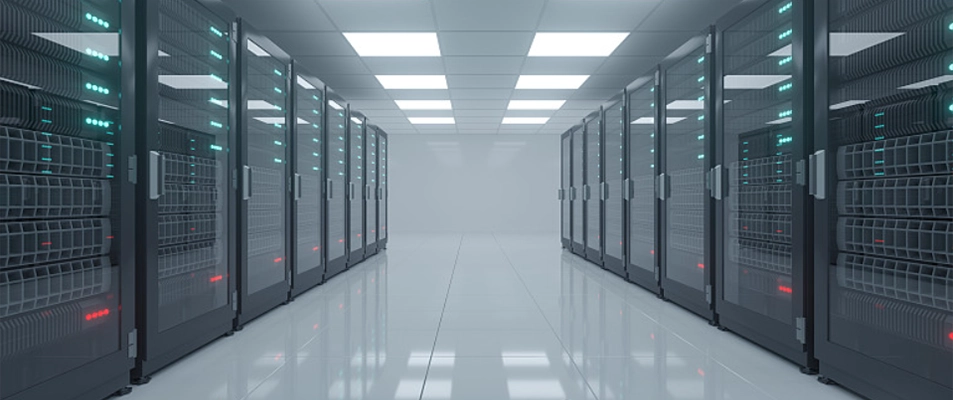
As AI computing, high-performance computing (HPC) and high-density data centers continue to develop, liquid cooling systems are becoming increasingly important for thermal management.
Compared with traditional air cooling, liquid cooling provides higher heat transfer efficiency and better thermal control for high-power computing equipment. However, maintaining coolant cleanliness is critical to ensure long-term system stability.
A common issue in liquid cooling projects is not the absence of filtration, but the selection of an unsuitable filtration solution.
A system may operate normally during the initial commissioning stage, with stable temperature control and expected cooling performance. However, after months of operation, problems such as increased pressure drop, reduced flow rate and declining heat exchange efficiency may gradually appear.
In many cases, the root cause is related to improper filter selection.
This article explains the common mistakes in liquid cooling filtration selection and how to choose a more suitable filtration solution for CDU-based cooling systems.
Mistake 1: Selecting Filters Based Only on Filtration Accuracy
One of the most common mistakes is focusing only on the filtration rating.
When selecting a filter, many engineers first ask:
"How many microns can the filter remove?"
Filtration accuracy is important, but it is only one part of the selection process.
A suitable filtration solution should also consider:
1. Filtration Rating
The filter should match the particle size that needs to be removed from the coolant system.
Selecting an unsuitable filtration rating may result in either insufficient contamination control or unnecessary flow resistance.
2. Flow Capacity
The filtration unit must match the designed coolant flow rate.
A filter with insufficient flow capacity may increase pressure drop and affect coolant circulation performance.
3. Temperature and Pressure Resistance
The filter material and structure should be compatible with the system operating conditions.
Temperature fluctuations, operating pressure and coolant characteristics all need to be considered during selection.
4. Maintenance Requirements
A filtration solution should not only perform well during operation but also support convenient maintenance.
The replacement process, maintenance frequency and system downtime should be evaluated before installation.
For CDU liquid cooling systems, filtration selection should be based on the complete operating environment rather than a single specification.
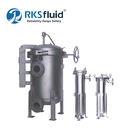
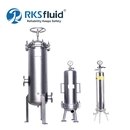
RKSfluid provides customized CDU liquid cooling precision filtration units designed according to system requirements, including flow conditions, coolant characteristics and application scenarios.
Mistake 2: Treating Filtration as a One-Time Installation
Another common misunderstanding is considering the filter as a component that only needs to be installed once.
In reality, filtration is a continuous process.
During liquid cooling operation, particles and contaminants may gradually accumulate in the coolant loop. Over time, these contaminants can affect system performance if filtration and maintenance are not properly managed.
Potential consequences include:
Increased Pressure Drop
As contaminants accumulate on the filter element, resistance increases. This may increase pump load and energy consumption.
Reduced Flow Performance
Higher pressure loss may reduce coolant circulation efficiency and affect thermal management performance.
Contamination Risk to Precision Components
The most critical issue is that excessive contamination may affect sensitive components such as:
- Cold plates
- Microchannel structures
- Pumps
- Heat exchangers
For high-density AI servers and HPC systems, maintaining coolant cleanliness is essential because even small particles may influence the performance and reliability of precision cooling components.
RKSfluid recommends planning maintenance requirements during the design stage, including filter replacement cycles, operating conditions and spare parts management.
Mistake 3: Comparing Filter Price Instead of Total Lifecycle Cost
Initial purchase price is often an important consideration during procurement. However, selecting a filtration solution only based on the lowest price may increase overall operating costs.
A lower-cost filter may require:
- More frequent replacement
- More maintenance labor
- Longer downtime during service
- Higher risk of system performance degradation
The correct approach is to evaluate the Total Cost of Ownership (TCO).
| Comparison Item |
Low-Cost Solution |
Optimized Filtration Solution |
| Initial Purchase Cost |
Lower |
Slightly Higher |
| Replacement Frequency |
More frequent |
Less frequent |
| Maintenance Downtime |
Higher |
Lower |
| System Protection |
Reduced over time |
Stable performance |
| Lifecycle Cost |
Potentially Higher |
More Cost Effective |
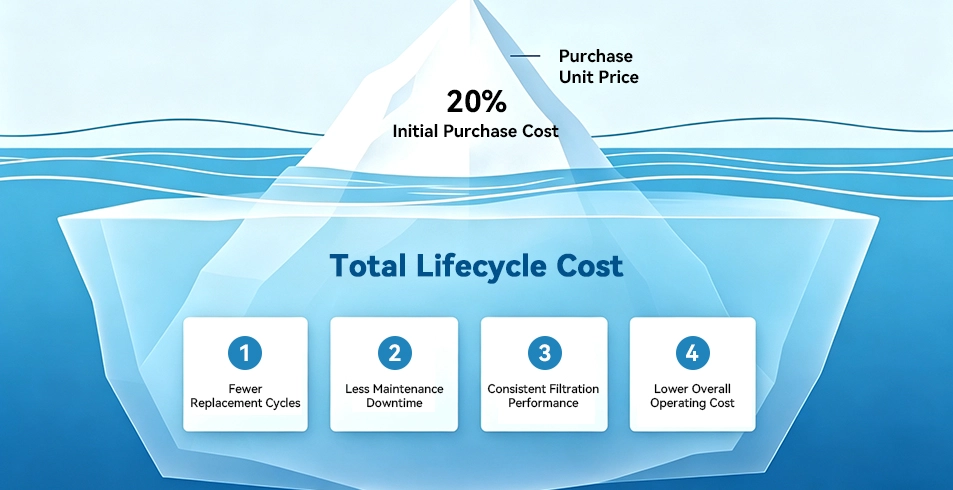
A filtration solution that costs slightly more initially may provide better long-term value through improved reliability and reduced maintenance requirements.
For liquid cooling infrastructure, the right question is not:
"Which filter has the lowest price?"
The better question is:
"Which filtration solution provides the best overall lifecycle value?"
How to Select the Right Filtration Solution for Liquid Cooling Systems
After understanding the common mistakes, the selection process can be simplified into three steps.
Step 1: Understand Your Operating Conditions
Before selecting a filtration system, collect key application information:
- Coolant type
- System flow rate
- Operating temperature
- Operating pressure
- Contamination source
- Required cleanliness level
This information provides the foundation for proper filtration selection.
Step 2: Match the Filtration Solution
A professional filtration supplier should provide more than a product quotation.
A complete solution should include:
- Filter selection recommendation
- Technical reasoning
- Compatibility evaluation
- Maintenance suggestions
- Spare parts planning
For data center and HPC liquid cooling applications, RKSfluid supports customized filtration solutions based on actual system requirements.
Step 3: Evaluate Lifecycle Cost
When comparing different solutions, consider:
- Initial equipment cost
- Filter replacement frequency
- Maintenance labor
- System downtime
- Long-term reliability
A three-year or five-year evaluation often provides a more accurate comparison than the initial purchase price alone.
The Role of Filtration in CDU Liquid Cooling Systems
A CDU (Coolant Distribution Unit) plays an important role in modern liquid cooling infrastructure by managing coolant circulation between facility cooling systems and IT equipment.
Within the CDU system, filtration helps maintain coolant cleanliness and protect critical cooling components.
A properly selected CDU filtration unit can help:
- Remove particulate contamination
- Maintain stable coolant circulation
- Reduce contamination risks
- Support reliable operation of cold plates and heat exchangers
As AI servers and HPC systems continue to increase computing density, precision filtration becomes an increasingly important part of liquid cooling system design.
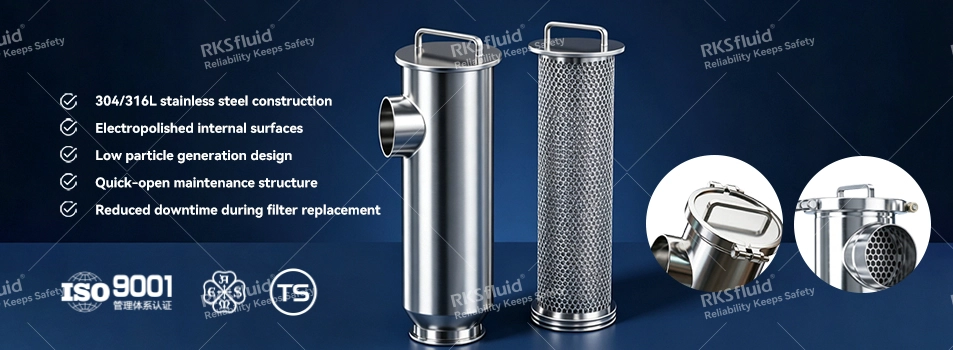
RKSfluid develops filtration solutions for industrial and advanced cooling applications.
For data centers, AI infrastructure and HPC systems, RKSfluid provides:
- CDU liquid cooling precision filtration units
- Customized filtration solutions
- Engineering support for system selection
Our team can assist with filtration requirements, technical evaluation and customized solutions based on your application conditions.
Contact RKSfluid to discuss your liquid cooling filtration requirements.
 +86 138 8989 6699