As artificial intelligence (AI) models continue to grow in scale, global data infrastructure is entering a new stage often described as the "AI factory" era.
Unlike traditional data centers that mainly provide computing resources, modern AI data centers are becoming highly integrated systems designed to continuously produce computing capacity. This transformation is driving major changes in data center architecture:
- Higher-density GPU servers
- Larger-scale computing clusters
- Increasing power consumption
- More demanding thermal management requirements
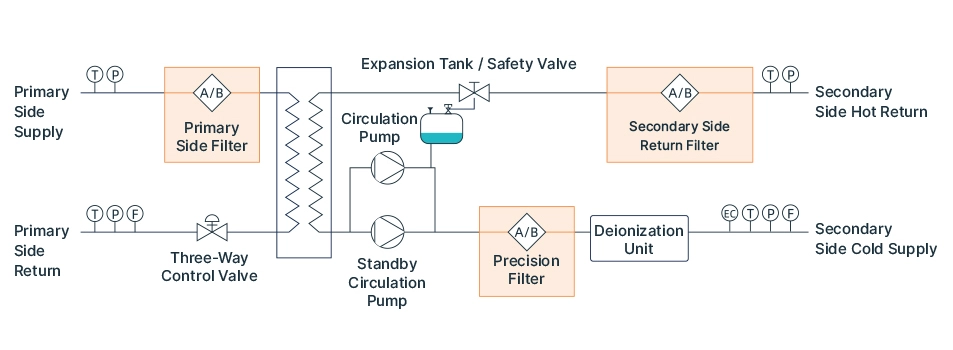
Under these conditions, liquid cooling is rapidly becoming a key technology for next-generation data centers. However, while cooling plates, heat exchangers, and CDU (Coolant Distribution Unit) systems receive significant attention, one critical component is often overlooked — the filtration system inside the liquid cooling loop.
The CDU filter may appear to be a standard component, but its performance directly affects system cleanliness, cooling efficiency, and long-term operational reliability.
Why Liquid Cooling Systems Need Better Contamination Control
In high-density AI computing environments, system reliability requirements have changed.
The goal is no longer simply keeping equipment operational. For expensive GPU servers and high-performance computing (HPC) systems, unexpected downtime and performance degradation can create significant operational losses.
However, liquid cooling systems are not completely free from contamination, During manufacturing, installation, commissioning, and long-term operation, various particles may enter the cooling loop, including:
- Metal processing residues
- Welding debris
- Seal material particles
- Pipeline oxidation products
- Internal system deposits
Although these contaminants may appear insignificant, they can create problems in advanced liquid cooling systems:
- Cold plate microchannel blockage
- Reduced heat transfer efficiency
- Increased pump wear
- Rising pressure drop
- Reduced system stability over time
In many cases, what appears to be a cooling performance issue is actually related to system cleanliness and contamination control.
Filtration Problems Often Develop Gradually
Liquid cooling system failures are rarely caused by a single sudden event, many issues develop gradually over time:
- Small seal wear
- Minor leakage progression
- Increasing pressure drop
- Higher filter loading
These changes may not immediately affect operation, but they accumulate during long-term service and eventually influence system reliability.
For this reason, filtration performance should not only be evaluated by initial parameters such as filtration accuracy or flow rate.
The real question is:
How does the filter perform after thousands of hours of continuous operation?
Why CDU Filter Design Matters Beyond Basic Specifications
From a product specification perspective, many CDU filters may appear similar: Stainless steel construction, Similar filtration ratings, Comparable flow capacity and Standard connection designs etc.
However, actual operating performance can vary significantly, the difference often comes from the structural design and manufacturing process.
A filter housing that performs well during initial operation may experience challenges after repeated maintenance cycles, especially when sealing surfaces and internal cleanliness become critical.
RKSfluid Liquid Cooling Filtration Solutions
RKSfluid believe that CDU filtration is not only about removing particles, It is about protecting the long-term reliability of the entire liquid cooling system.
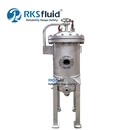
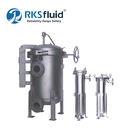
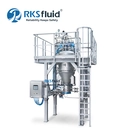
Our filtration solutions are designed with a focus on structural reliability, maintenance efficiency, and contamination control.
1. Cold Drawn Integrated Housing Design
Traditional filter housings may use welded structures for opening and connection areas.
While welding is a mature manufacturing method, it may introduce potential issues during long-term operation, including:
- Heat deformation
- Local stress concentration
- Surface irregularities
- Potential impact on sealing performance
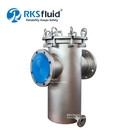
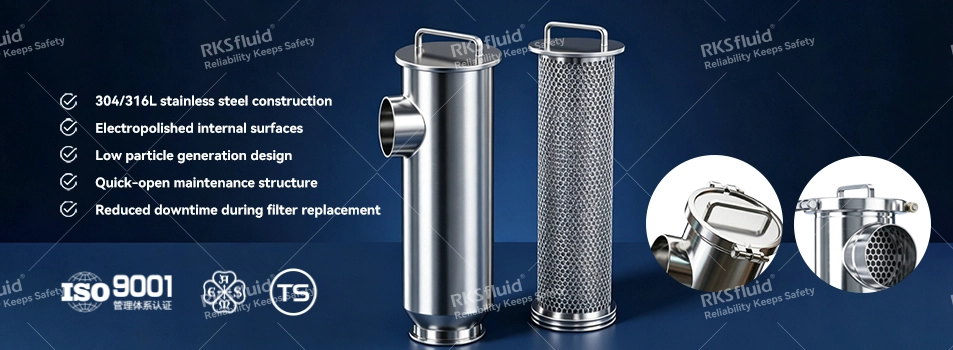
RKSfluid adopts a cold drawn integrated forming structure for the filter housing:
- Smoother continuous surfaces
- Reduced weld-related risks
- Improved sealing reliability
- Better durability during repeated maintenance
2. Multi-Cartridge Filter Design
In high-flow liquid cooling applications, insufficient filtration area can result in:
- Higher pressure drop
- Shorter filter service life
RKSfluid multi-cartridge filtration design increases effective filtration area to achieve:
- Higher dirt holding capacity
- Lower operating pressure drop
- More stable coolant flow
- Longer maintenance intervals
The objective is to improve overall system efficiency during continuous operation.
3. Quick Maintenance Connection Design
For data center cooling infrastructure, maintenance time directly affects system availability.
RKSfluid filtration solutions support quick maintenance through optimized connection design, helping reduce service time during filter replacement and inspection.
4. High Cleanliness Surface Treatment
RKSfluid applies polishing and surface treatment processes to help:
- Reduce particle attachment
- Minimize contamination accumulation
- Improve long-term cleanliness
5. Industrial-Grade Materials & Manufacturing Standards
The filter housing uses A270/270M S30400 stainless steel.
High strength, corrosion-resistant, and oxidation-resistant; no risk of leakage during long-term operation.
All seals comply with NSF-1 and RoHS requirements.
Free of hazardous substances; environmentally friendly and compliant.
Meets EU and North American environmental regulations.
The Real Difference Appears After Long-Term Operation
During initial testing, many filtration products may show similar performance, however, after extended operation, differences become clearer:
Which filter maintains lower pressure growth?
Which design provides longer sealing life?
Which solution requires less maintenance?
Which system maintains better stability?
As AI computing infrastructure continues to expand, reliable liquid cooling filtration will become increasingly important.
RKSfluid provides customized liquid cooling filtration solutions for AI data centers, HPC systems, and industrial applications.
 +86 138 8989 6699