How to Select Mesh Size and Pressure Rating for Industrial Basket Filter

Home > News > Filter Industry News  > How to Select Mesh Size and Pressure Rating for Industrial Basket Filter

Main Product

  • China Athena Double Eccentric Butterfly Valve Manufacturer | EN593 Water Valve Supplier manufacturer
  • China Double Eccentric Flange Butterfly Valve manufacturer

    Double Eccentric Flange Butterfly Valve

    RKS fluid was founded in 1997. We are a production workshop for both foundry and machining, research & development center, and quality inspection cent...

  • China Swing check valve manufacturer

    Swing check valve

    Swing check valve is mounted with a disc that swings on a hinge or shaft. The disc swings off the seat to allow forward flow and when the flow is stop...

  • China Hydraulic Control Valve manufacturer

    Hydraulic Control Valve

    Features: Fully bore globe pattern design, lowest head loss while fully open Keep stable working condition even the flow rate close to zero High sens...

  • China Ball Check Valve manufacturer

    Ball Check Valve

    Ⅰ Business area: fluid control products, technology and environmental protection products. Ⅱ Advanced CNC machining centers, professional process ce...

  • China Metal Seated Gate Valve manufacturer

    Metal Seated Gate Valve

    RKS fluid was founded in 1997. We are a production workshop for both foundry and machining, research & development center, and quality inspection cent...

  • China Resilient Seated Gate Valve manufacturer

    Resilient Seated Gate Valve

    Series: SASQUATCH series soft seal gate valve Port size: DN50 - DN900 (NPS2-NPS36) Pressure rating: PN10, PN16 Temperature: 0℃~80℃ Connection: Flange Certificate: CE ,WRAS,API,OHSAS18001:2007,ISO9001:2015

  • China Resilient Seat Butterfly Valve manufacturer

    Resilient Seat Butterfly Valve

    Series: HYDRA Series Resilient Seat Butterfly Valve Temperature: -29℃ ~ +120℃ Pressure: PN6, PN10, PN16(Class 150) Port Size: DN32-DN2400(NPS1 1/4-NPS96) Power: Manual, Electric, Pneumatic, Hydraulic

News

The Difference Between A Lug and Wafer Butterfly Valve

The Difference Between A Lug and Wafer Butterfly Valve

2019-02-12 16:59:28

Butterfly valves have been around for a long time, and are used for a variety of applications. They made their first appearance during the 1930s, and have been utilized by several industries ever since. Often made out of cast iron, butterfly valve's name is based from the functionality of its disc.

Wafer type butterfly valve installation instructions and steps

Wafer type butterfly valve installation instructions and steps

2019-01-03 16:27:13

The wafer butterfly valve is one of the most common types of valves in industrial pipelines. The structure of wafer butterfly valve itself is relatively small. It is only necessary to put the butterfly valve in the middle of the flange at both ends of the pipe, and use the stud bolt to pass through the pipe flange and the pair.

Manual valve operation method

Manual valve operation method

2019-04-01 11:50:16

The manual valve is a valve operated by the handle and the hand wheel, and is a commonly used valve on the equipment pipeline.

Twenty-five Taboos for Valve Installation

Twenty-five Taboos for Valve Installation

2019-09-06 10:23:57

Valves are the most common equipment in chemical companies. It seems easy to install valves, but if they are not implemented in accordance with the re...

Valve common standards and differences

Valve common standards and differences

2019-05-07 17:37:21

DIN standard now uses EN standard structure length
EN 558-1 PN flange connection valve construction length (instead of DIN 3202), EN 558-2 CLASS flange connection valve construction length (instead of BS2080), EN 12982 butt weld end valve construction length (instead of DIN 3202), DIN standard The length of the structure including the length of the API valve is basically the same as the length of the GB...

Resilient Seated Gate Valve

Resilient Seated Gate Valve

2022-10-17 16:09:38

Resilient-seated gate valve with bolted cover connection; made of ductile iron materials and with epoxy coating, designed as both clockwise and anti-c...

Butterfly Valve Seat & Seal Ring Replacement Method

Butterfly Valve Seat & Seal Ring Replacement Method

2021-02-01 18:14:53

The butterfly valve disc is a key component of the butterfly valve, which acts on closing and opening and closing. Butterfly valve seat and butterfly ...

What's the working principle of Kieselguhr Filter?

What's the working principle of Kieselguhr Filter?

2019-07-01 13:05:32

What is Kieselguhr Filter? What's the working principle of Kieselguhr Filter? The kieselguhr filter (Candle filter /  Cake Filter) which we for customized for fluorine chemical plant six more lithium fluoride phosphate phosphorus process have been installed and working for two years

New designed PTFE  RPTFE sealing replaceable seat high performance butterfly valve

New designed PTFE RPTFE sealing replaceable seat high performance butterfly valve

2022-04-24 10:39:22

MINOTAUR series replaceable seat high performance butterfly valve

Contact us

RKSfluid Flow Control Company

Web: www.rksfluid.com
Tel:  +86 24 2318 0188
Fax: +86 24 2318 0788
Mail: info@rksfluid.com

How to Select Mesh Size and Pressure Rating for Industrial Basket Filter

2026-03-02 11:09:49

In industrial pipeline systems, basket filters play a critical role in protecting pumps, valves, heat exchangers and instrumentation from solid contaminants. However, improper selection of mesh size or pressure rating can lead to excessive pressure drop, frequent maintenance, or even system failure. This guide explains how to correctly select mesh size and pressure rating for industrial basket filters based on engineering principles.


1. Understanding the Purpose of a Basket Filter

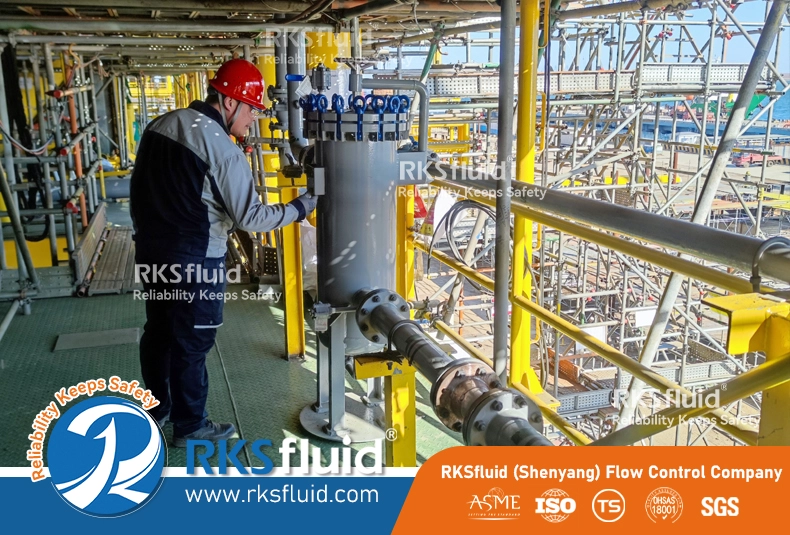
An industrial basket filter (basket strainer) is installed in pipelines to remove solid particles from liquids such as: Water, Oil, Petrochemical fluids, Seawater, Steam condensate

The goal is not ultra-fine filtration — but equipment protection and process stability. Therefore, selection must balance:

  • Particle retention
  • Pressure loss
  • Flow rate
  • Maintenance interval

2. How to Select the Correct Mesh Size

What Does Mesh Mean?
Mesh refers to the number of openings per inch in the filter screen.

Higher mesh number → Smaller opening → Finer filtration
Lower mesh number → Larger opening → Higher dirt-holding capacity


Typical industrial mesh ranges:

Mesh Approx. Particle Size Typical Application
10-40 Coarse filtration Pump protection
60-100 Medium filtration General process systems
200-500 Fine filtration Instrument protection

Engineering Consideration 1: Target Particle Size

Select a mesh size slightly smaller than the minimum particle size that must be removed.

Example:
If the system must block particles above 300 microns, a 60–80 mesh may be appropriate.


Engineering Consideration 2: Differential Pressure

Finer mesh increases resistance and causes higher pressure drop.

If mesh is too fine:

  • Flow rate decreases
  • Cleaning frequency increases
  • Risk of bypass or deformation increases

Recommended practice:
Install differential pressure gauges upstream and downstream of the basket filter. Clean the basket when differential pressure reaches the allowable limit defined in the system design.

Engineering Principle:
Always balance filtration precision with acceptable pressure loss.


3.How to Select Pressure Rating (150LB–2500LB)


Pressure rating must match or exceed the pipeline design pressure.

Industrial basket filters are commonly supplied in:

  • 150LB – 300LB → Water and general industrial systems
  • 600LB – 900LB → Oil & gas, petrochemical
  • 1500LB – 2500LB → High-pressure hydrocarbon or critical systems

When selecting pressure rating:

  • Identify maximum operating pressure
  • Consider surge pressure or pump start-up pressure
  • Ensure flange standard compatibility (ANSI, ASME, DIN)

Never underspecify pressure class — safety and compliance depend on it.


4. Material Selection for Different Media

Material choice directly impacts service life and corrosion resistance.

Common materials:

  • Carbon Steel (CS) → Non-corrosive water systems
  • Stainless Steel (SS304/316) → Chemical and mildly corrosive media
  • Duplex Stainless Steel (DSS) → Seawater and highly corrosive environments

For offshore or marine systems, duplex stainless steel basket filters significantly improve corrosion resistance and lifespan.


5. Matching Basket Filter Size to Flow Rate

Nominal diameter (DN15–DN800) should match pipeline size.

Oversizing is generally not required, but undersizing may increase:

  • Velocity
  • Pressure drop
  • Maintenance frequency

For large-diameter water transmission pipelines (DN600–DN800), basket filters provide higher dirt-holding capacity compared to Y-strainers.


6. When to Choose a Basket Filter Instead of a Y-Strainer

Basket filters are preferred when:

  • High flow capacity is required
  • Larger debris load is expected
  • Lower pressure drop is necessary
  • Easy maintenance access is important

For horizontal pipeline systems with significant solid content, basket filters offer better performance and serviceability.


7. Practical Selection Example

Example:
Medium: Seawater
Pipeline: DN400
Design Pressure: 1.6 MPa
Required Filtration: Protect pump (particles > 500 micron)

Recommended configuration:

DN400 basket filter
40–60 mesh
150LB–300LB pressure rating
Duplex stainless steel basket

This configuration balances corrosion resistance, flow stability and maintenance cycle.


For detailed technical specifications and available configurations (DN15–DN800, 10–500 mesh, up to 2500LB), consult the industrial basket filter product page or contact our engineering team.