Choosing the right butterfly valve depends on more than pipeline size and pressure rating. Valve design, sealing performance, operating frequency, pressure conditions, and lifecycle requirements should all be considered.
For water supply, water treatment, pumping stations, and industrial pipeline systems, two commonly considered options are concentric butterfly valves and double eccentric butterfly valves. So, what is the difference between them, and when should you choose a double eccentric butterfly valve?
1. What Is a Concentric Butterfly Valve?
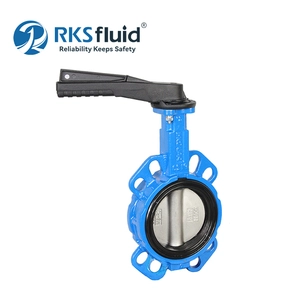
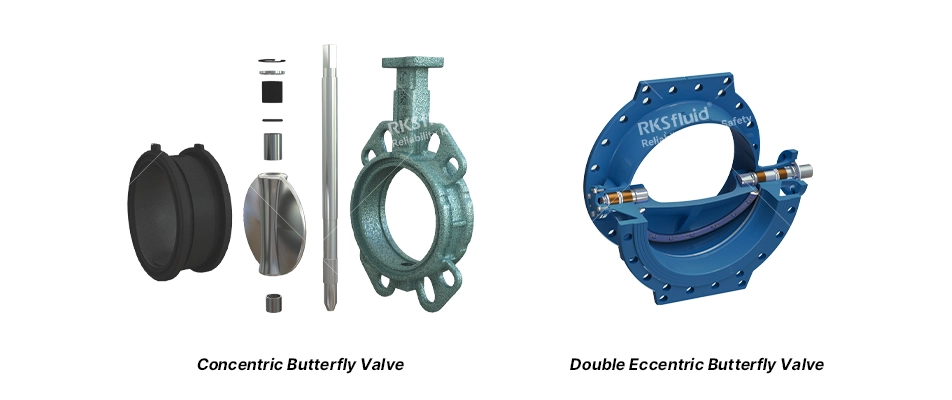
A concentric butterfly valve, also known as a centerline butterfly valve, has a stem positioned along the centerline of the valve disc and pipeline.
When the valve opens or closes, the disc rotates around its central axis. The disc remains in contact with the resilient seat during most of the operating cycle.
This design is relatively simple and compact, making it widely used in:
- Water distribution systems
- HVAC systems
- General industrial pipelines
- Fire protection systems
- Low to moderate pressure applications
Its main advantages include simple construction, compact dimensions, relatively low weight, and competitive cost.
However, continuous contact between the disc and seat can result in higher friction and seat wear, particularly when the valve is frequently operated or used under higher pressure conditions.
2. What Is a Double Eccentric Butterfly Valve?
A double eccentric butterfly valve moves the stem away from the centerline of the disc and the pipeline.
This offset design allows the disc to move away from the seat shortly after opening and approach the seat mainly during the final stage of closing. As a result, the valve has significantly less sliding contact between the disc and seat during operation.
This design is commonly used for:
- Large-diameter water pipelines
- Water transmission systems
- Pumping stations
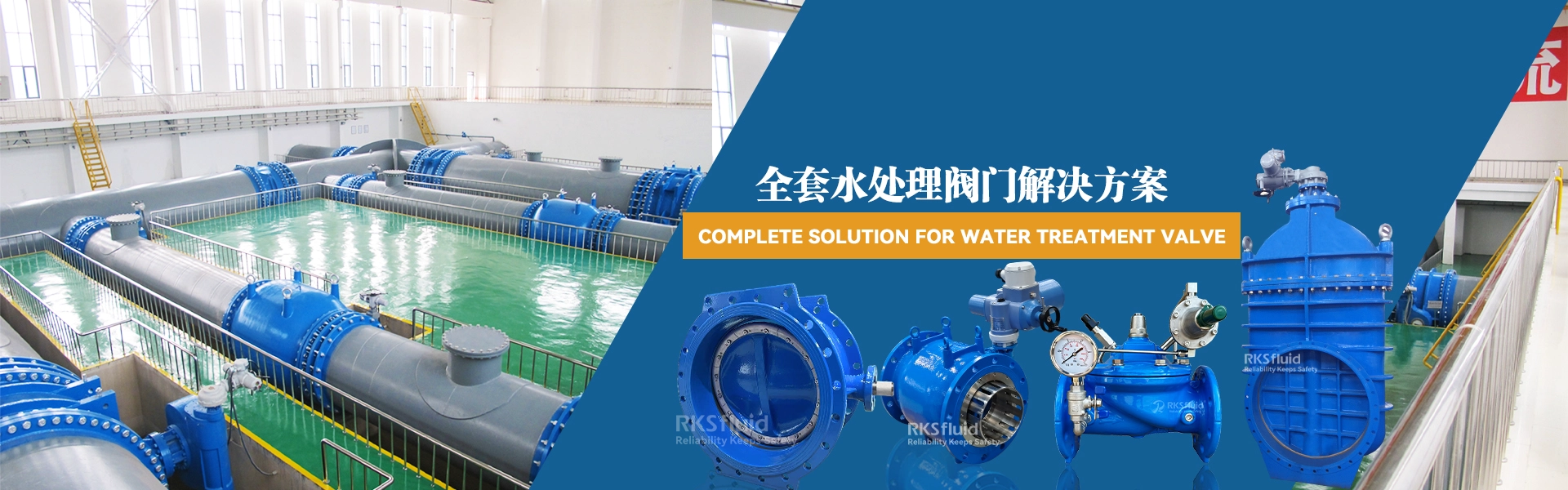
- Water treatment plants
- Industrial water systems
- High-cycle pipeline applications
- Applications requiring improved sealing and longer service life
The double eccentric design is particularly valuable where reliable shut-off performance and reduced seat wear are important.
3. Double Eccentric vs Concentric Butterfly Valve
| Feature |
Concentric Butterfly Valve |
Double Eccentric Butterfly Valve |
| Disc stem design |
Centerline |
Double offset |
| Seat contact |
Continuous contact during rotation |
Reduced contact during most of the rotation |
| Operating friction |
Relatively higher |
Lower |
| Seat wear |
Higher under frequent operation |
Reduced |
| Sealing performance |
Suitable for general applications |
Improved shut-off performance |
| Operating torque |
Generally lower for smaller valves |
Depends on size,pressure and seat design |
| Large-diameter applications |
Suitable depending on conditions |
Particularly suitable |
| High-cycle operation |
Application dependent |
Better suited |
| Initial cost |
Generally lower |
Generally higher |
| Lifecycle considerations |
Suitable for standard service |
Advantageous where durability is important |
The important point is that a double eccentric butterfly valve is not automatically the better choice for every application.
The right selection depends on the actual operating conditions and project requirements.
4. Why Does the Double Eccentric Design Reduce Seat Wear?
This is one of the most important differences between the two designs.
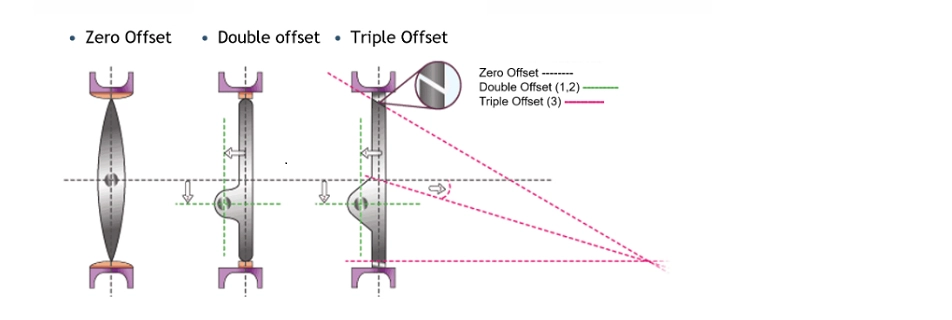
In a concentric butterfly valve, the disc remains in contact with the resilient seat as it rotates. This creates friction between the disc and seat.
In a double eccentric butterfly valve, the offset stem position changes the movement of the disc. During opening, the disc moves away from the seat earlier in the rotation. During closing, the disc approaches the seat mainly near the final closing position.
The result can include:
- Reduced seat friction
- Lower seat wear
- Smoother operation
- Better suitability for frequent operation
- Improved service life under appropriate operating conditions
For large-diameter pipelines, where valve operation can involve significant forces and torque, this design advantage becomes more important.
5. Which Valve Is Better for Large-Diameter Water Pipelines?
For large-diameter water pipelines, double eccentric butterfly valves are often preferred, particularly when the system requires reliable shut-off, frequent operation, or long-term service.
For example, a project may require valves for:
- DN500–DN1800 water pipelines
- Pumping stations
- Water transmission systems
- Municipal water networks
- Water treatment plants
- Industrial water circulation systems
In these applications, the selection should consider more than the purchase price.
Engineers should evaluate:
Valve size + pressure rating + operating frequency + sealing requirements + actuator torque + lifecycle requirements
A valve with a slightly higher initial cost may provide better overall value when reduced maintenance and longer service life are considered.
6. When Should You Choose a Concentric Butterfly Valve?
- The application is relatively straightforward
- Pressure and operating conditions are moderate
- Valve operation is not particularly frequent
- Compact dimensions are important
- Initial equipment cost is a major consideration
- A resilient-seated design meets the required sealing performance
For general water, HVAC, and industrial applications, a concentric butterfly valve can provide a cost-effective solution.
7. When Should You Choose a Double Eccentric Butterfly Valve?
A double eccentric butterfly valve should be considered when the application requires higher performance or more demanding operating conditions.
Large valve sizes
For large-diameter pipelines, the reduced seat contact of the double eccentric design can provide significant operational advantages.
Frequent operation
Where valves are opened and closed regularly, minimizing seat friction and wear becomes more important.
Reliable shut-off
Double eccentric designs can provide reliable sealing performance when properly selected and manufactured for the required service conditions.
Long-term operation
For infrastructure and industrial projects where maintenance access is difficult or downtime is costly, lifecycle performance should be considered alongside the initial valve price.
8. What Else Should Engineers Consider?
The eccentricity of the valve is only one part of the selection process.
Before specifying a butterfly valve, engineers should also confirm:
- Size, Pressure rating, Valve body and disc material (Material selection should match the medium, pressure, temperature and corrosion conditions.)
- Seat material, Connection;
- Actuation (Manual gearbox, electric actuator or pneumatic actuator may be selected according to operating requirements.)
For large-diameter or automated valves, actuator torque calculation and valve operating conditions should be confirmed before final selection.
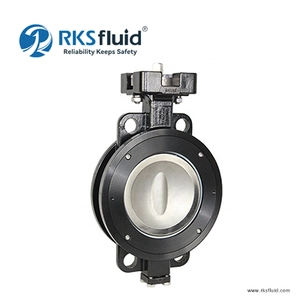
9. RKSfluid ATHENA Series Double Eccentric Butterfly Valve
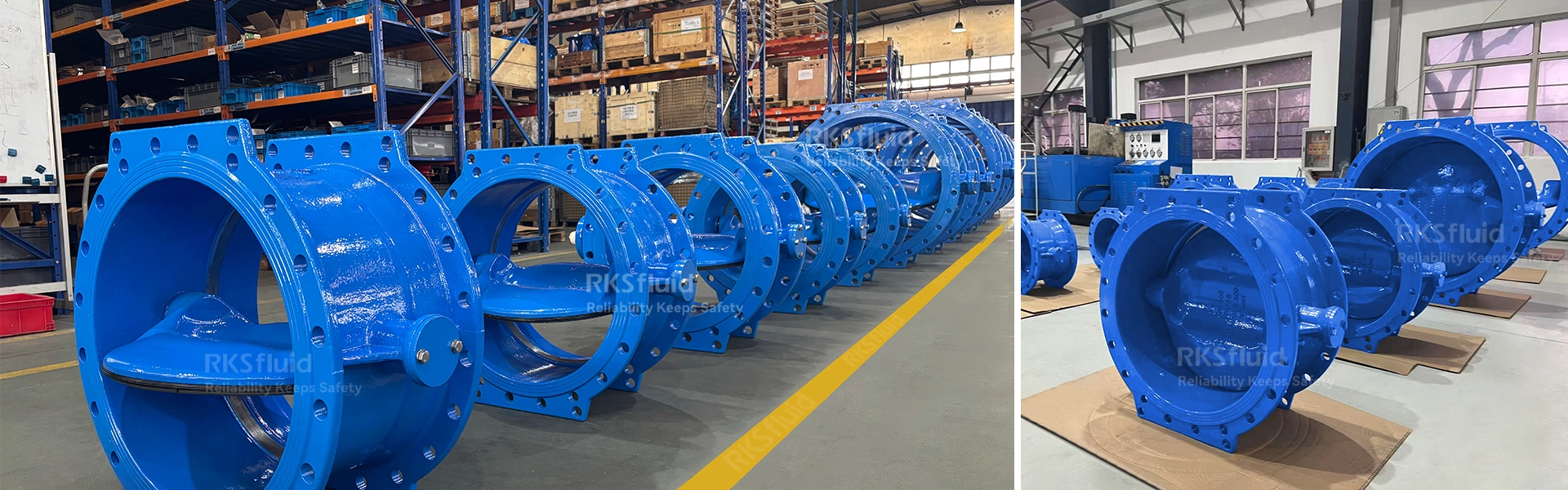
For water transmission and industrial pipeline applications, RKSfluid offers the ATHENA Series Double Eccentric Butterfly Valve.
Designed for applications requiring reliable flow isolation, reduced seat friction and long-term operational performance.
Typical configurations include:
- Size: DN150–DN1800
- Pressure: PN10, PN16, PN25; (PN40 available on request)
- Connection: Double flange
- Seat: Disc side sealing ring, EPDM,NBR
- Disc: Ductile iron, CF8, CF8M and other options according to requirements
- Operation: Manual gearbox, electric actuator or pneumatic actuator
- Gearbox: IP67 standard; IP68 available as an option
- Design standards: EN 593, EN 1074-1/2
- Face-to-face: EN 558
- Flange: EN 1092
Actuator selection can be supported according to valve size, pressure, operating conditions and required torque.
For projects requiring a specific configuration, RKSfluid can provide technical support for valve selection, material configuration and actuator matching.
10. Double Eccentric or Concentric: Which One Should You Choose?
There is no universal answer.
For general-purpose, cost-sensitive applications, a concentric butterfly valve may be the more economical choice.
For large-diameter pipelines, frequent operation, demanding sealing requirements, or projects where lifecycle performance is important, a double eccentric butterfly valve is often the more appropriate solution.
The best choice should be based on the complete operating conditions rather than valve price alone.
If you are selecting a butterfly valve for a water transmission pipeline, pumping station, water treatment plant or industrial pipeline, provide the valve size, pressure rating, medium, temperature, connection and actuation requirements
RKSfluid can help recommend a suitable butterfly valve configuration and actuator solution based on your project requirements.
 +86 138 8989 6699